
Support is tuned, not simply made harder.
Think of suspension in a well-built car. A comfortable ride does not mean the car has no control. And a stiff ride does not automatically mean better control — plenty of cars feel firm on the road, yet turn vague and unsettled the moment you push them through a hard corner. A well-tuned car can do both: ride comfortably every day, and still feel planted when it's pushed hard — because the springs, damping, structure, and contact points are matched to work together when the load changes. Stiffness is a feel. Control comes from tuning.
A mattress faces the same design problem. The part of the bed that carries the most load, night after night, can't be fixed by simply making it harder — hardness alone can create a rigid stripe under your hips, change how the surface feels, and still lose consistency under years of repeated compression.
StasisLayer™ is Manchot's answer — structural reserve tuned into the center third, where sustained load commonly concentrates, without turning the center into a hard band.
StasisLayer™ is Manchot's reinforced center-support system. It uses 2.3 mm tempered-steel pocket coils in the center third and 2.0 mm coils in the outer thirds, beneath a uniform 2.5 lb/ft³ foam specification across the sleep surface. The system is designed to add structural reserve through the center third while keeping the surface feel as continuous as possible.
Load is not distributed evenly.
The torso and pelvis account for a substantial share of body mass, but exactly where and how that load reaches a mattress varies with body size, sleep position, and posture. Sustained torso-and-hip loading commonly occurs through the middle portion of the sleep surface, where the same materials absorb repeated compression night after night.
StasisLayer™ turns that observation into a deliberate design choice: add structural reserve through the center third rather than assume every part of the mattress performs the same amount of work.
Read the full explanation: Why do mattresses lose support in the middle first? →
Sources
Making the center harder is easy. Tuning it to last — without feeling like a hard zone — is the design problem.
Stiffer center springs are the first thing anyone thinks of — including us. And they half-work: a much stiffer center resists compression differently. It can also change how the mattress feels beneath your hips. You might improve one part of the durability problem while creating a new comfort problem.
The trap exists because firmness and support are two different jobs. Firmness describes what the surface feels like tonight. Structural support describes how the system underneath continues to carry load, year after year. A hard center isn't automatically a supported one, just as a soft surface isn't automatically a sagging one.
And tuning is where it can go wrong in specific ways. If the center is too aggressive, the mattress can feel uneven. If the foam above it is not matched correctly, the support can disappear into the comfort layers. If the spring response is not controlled, the bed may feel firm at first but still lose consistency under repeated compression.
The goal is not a rigid stripe. It's structural reserve without a ridge you can locate through the comfort layers. That can't come from one part. It has to come from a system.
Three decisions, made together.
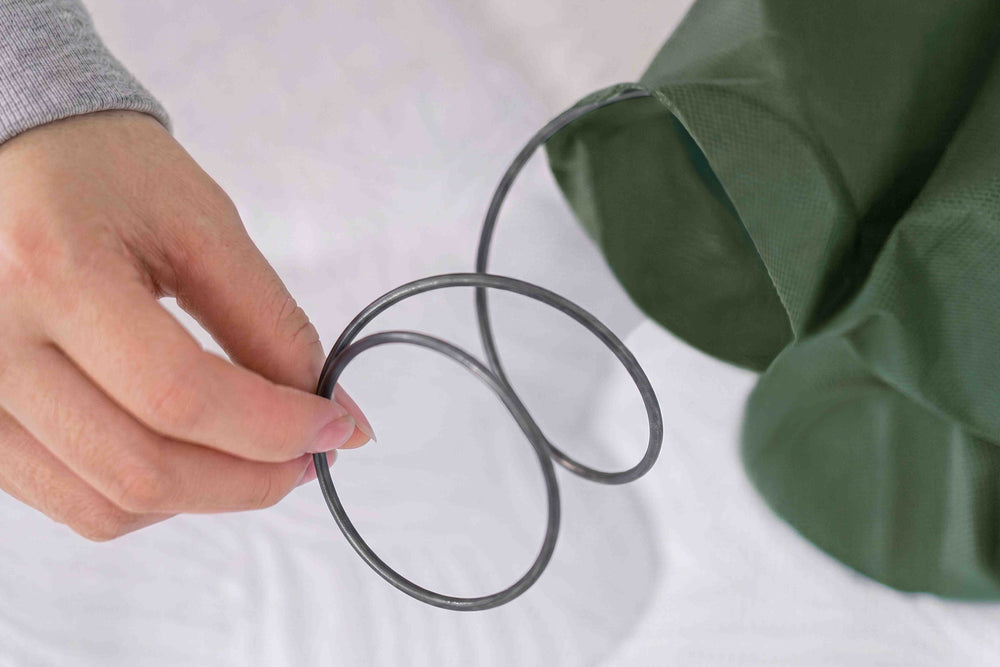
Structural reserve in the steel.
Spring behavior under repeated loading — how steel resists material fatigue across thousands of compression cycles — depends on wire gauge, steel properties, coil geometry, heat treatment, and manufacturing consistency. In StasisLayer™, the center third uses 2.3 mm tempered-steel pocket coils, while the outer thirds use 2.0 mm coils. That difference gives the center region additional structural reserve without making every coil in the mattress stiffer.
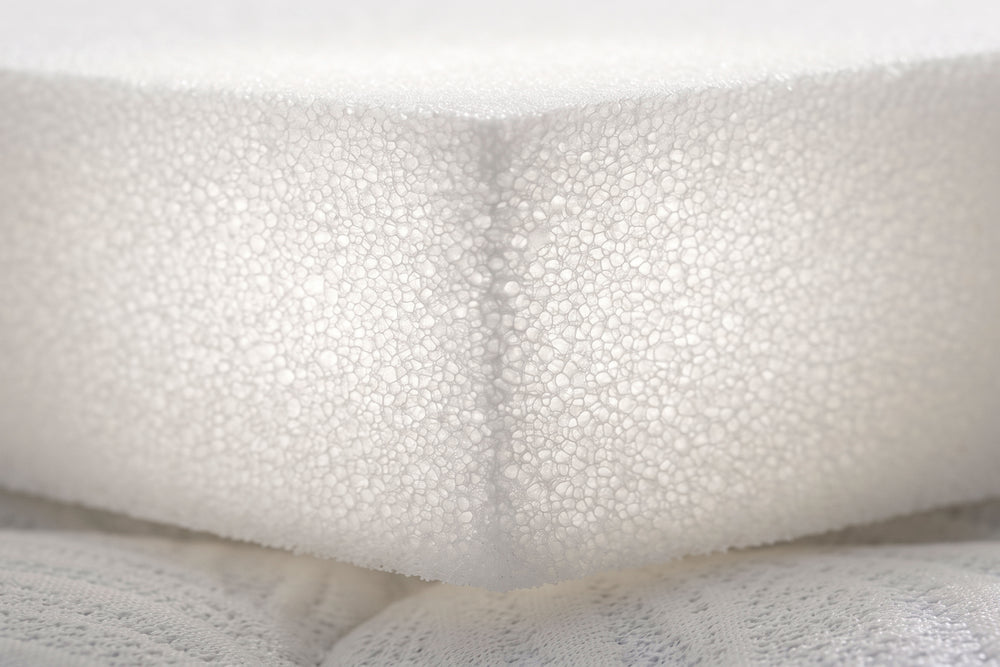
A surface that stays continuous.
One foam specification runs across the entire sleep surface — 2.5 lb/ft³, edge to edge. Because the foam is not zoned, the reinforcement remains below the surface and is designed not to read as a separate hard band. The surface's job is continuity; the structure's job is reserve.
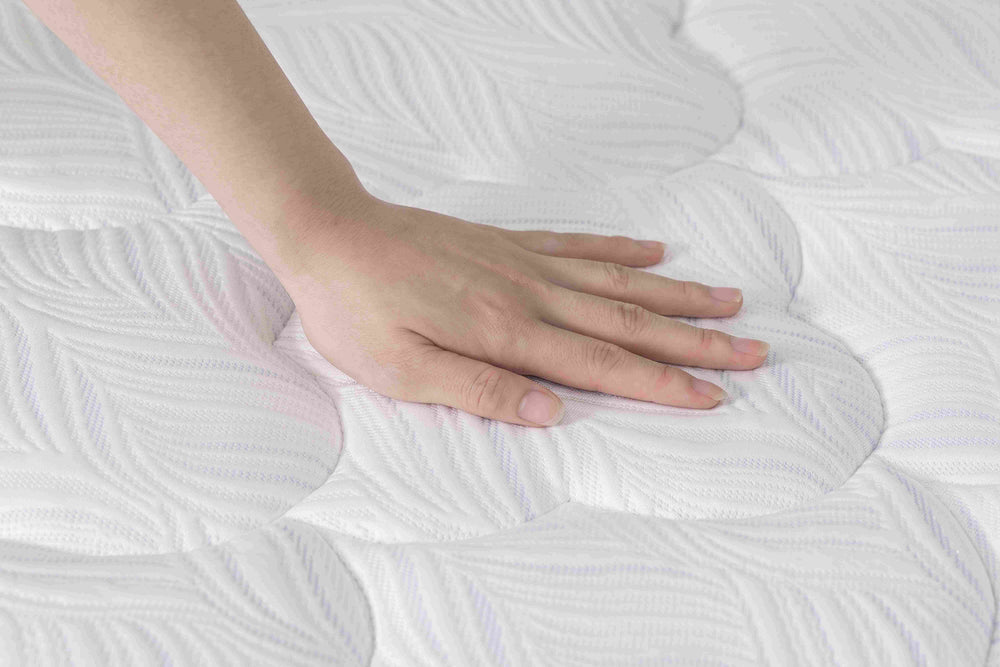
The response of the whole stack.
The finished mattress is evaluated around two questions: whether the reinforced band remains unobtrusive at the surface, and how center-zone height, firmness, and response change after cyclic loading. The first can be checked by lying across the finished mattress. The second requires a repeatable test method.
How we evaluate it.
A thicker center coil is a design input, not proof by itself. We evaluate production-specification mattresses using QB/T 1952.2-2023 at a third-party laboratory accredited to ISO/IEC 17025 for the relevant testing scope.
The method applies a weighted-roller durability test for 100,000 cycles, with height and firmness change recorded before and after testing.
This page summarizes the test method and its limitations.
What StasisLayer™ doesn't do.
We'd rather tell you this ourselves.
StasisLayer™ is designed to add structural reserve against center-first support loss. It does not make materials immune to aging, and it does not mean change can never occur. Every mattress changes with time, body weight, and use. Ours included.
It is not a hard center band. The reinforcement sits beneath the comfort layers and is intended to preserve an even surface feel. It is not a medical feature, and we don't make claims about pain, spines, or treatment.
It is a deliberate engineering choice — not a claim that every body loads a mattress in exactly the same way. Built to Stay the Same™ is a design direction: greater consistency over time, not a promise that time stops.